Showing posts with label Guided Reading. Show all posts

Tuesday, June 13, 2017

Guided Reading BUNDLE: Summer Prep

If you have been following me for a few years now, you know that I have a large, first grade (and kindergarten) guided reading bundle for sale in my TpT store. This bundle took me 6 months to create!  It is certainly the most extensive thing I have ever created.  This bundle includes activities for pre-readers through levels j/k.  The reason it includes packs for those not yet reading and those below grade level is because of what I've lived the past 13 years.  I have never had more than 4-5 kids come to me in August reading "at grade level."  It just doesn't happen.  I work in a very low, Title I school district.  The majority of our incoming kindergartners have never been to pre-school and our building is their first school setting.  I get a WIDE range of learners from non readers to the occasional above grade level reader.  I know that having just 4 kids come to you on grade level is probably not the norm everywhere.  However, every teacher gets a wide range of learners.  So that's the backstory behind why my pack is technically a k/1 bundle.


I have received wonderful feedback on my guided reading packs over the last two years, so today I wanted to take some time to share what all is included and how I choose to use it in my first grade classroom.  *Before I get into the meat and potatoes, I want to let you know that if you are interested in purchasing this bundle, do it THIS SUMMER!  There is a lot of prep required as far as printing and laminating/cutting goes.  Summer is a fantastic opportunity for prep!  We all like to have grand ideas of doing things "in the fall," but when fall rolls around and a thousand other things come up, our "plans" don't go as planned!  So if you have the time this summer, I strongly recommend taking full advantage and getting this bundle ready for your classroom!  You will be SO HAPPY that you did!

As I mentioned above, this bundle includes activities for pre-readers through levels j/k.  Each pack is somewhere between 100-150 pages.  Most levels are their own individual entity, but some are combined.  Each pack has activities carefully selected and created to match that specific level's needs. For example, in the pre-reader pack, you'll find many alphabet ID and beginning sound activities.  In the level E pack, you'll find digraph and sight word activities.  My selection process in creating these activities was based on research as well as my 13 years experience teaching first graders how to read.


There are many games included in the packs, because everything is more fun in game-form, right? There are also flash cards and printables.  What you won't find in here are books.  I  do not have experience with leveling text {and honestly have no interest in learning how!!}.  I also prefer to use real books with my students during guided reading time.  I like to give them an authentic experience when learning to read.  However, I know that not everyone has that option.  I am fortunate enough to have a leveled book room at my building.  It contains packs of leveled books from pre-reader through level z.  Each teacher checks out the book sets that he/she needs and returns them when finished.  It's been a wonderful system for many years.  If you do not have access to real books, I highly recommend Reading A to Z.  A membership is pretty affordable and you can print your own books for your guided reading groups.  You can also sign up for a free trial to see if a membership is something you're interested in.




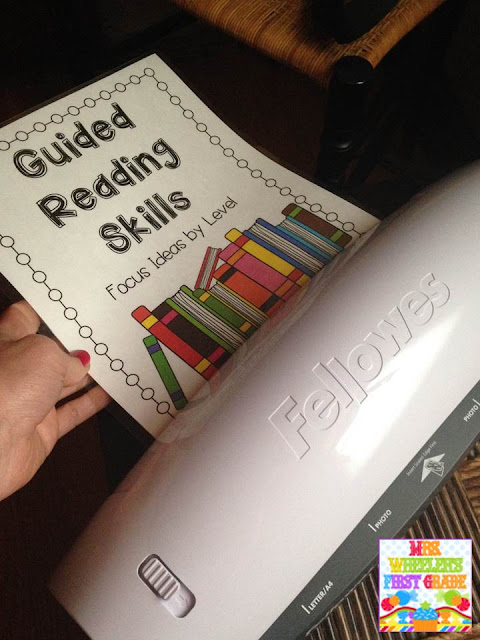
Once you've prepped the materials, you can store them in a variety of ways.  I prefer to store mine by skill, as I have a plethora of materials that I've either created of purchased over the past 13 years. I use clear tubs to keep my materials in.  When I need a specific game or activity, I go straight to the tub and grab what I need.  You can also store the materials by level in your tubs.  There are labels included in the bundle for organizing by level.  If you don't have the space or don't want to spend the money on tubs, you can always organize your materials in binders. Simply print out the included binder covers by level and add some clear sheet protectors to your binders.  Place games and printables inside them for quick access.  You can also purchase poly pockets that snap or zip shut if you want something more secure inside the binders.  The binder method is nice if you prefer to plan at home or need to plan at home for some reason.  They are great for on the go!


If you're on the fence, feel free to watch a YouTube video preview HERE or browse my other guided reading blog posts HERE.  However, I can say with certainty that this purchase is going to be an invaluable resource for many years to come! Feel free to email me with questions at meganwheeler44@yahoo.com

xo
Megan 

Monday, May 8, 2017

10 Favorite Guided Reading Supplies


Hi, everyone!  I hope you've had the chance to check out Part 1 and Part 2 of my Guided Reading series!  Today's post is about my top 10 favorite Guided Reading supplies.  These items have been my go-to for years now!  I'm linking everything up for you so you can grab them if you wish!

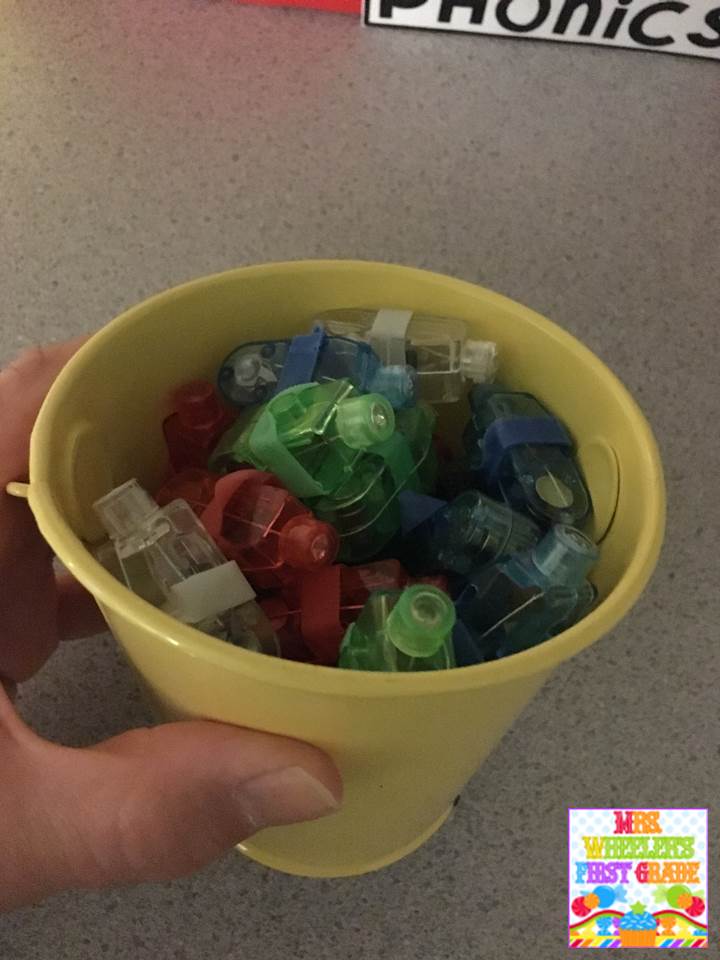
1.  Flashlight Fingers-This are excellent for tracking print.  Perfect for your beginning readers.  A little novelty always helps!  I'll pull these out on occasion {usually on Fridays}.    Click HERE to get yourself some!!!  Just $8 for a set of 40.


2.  Tracking Strips-I love using these everyday in groups.  They are, however, very expensive.  I purchased a bundle for a decent price a few years ago.  Now I see the price has gone up.  My students' parents really like these.  They are awesome for students with ADHD and dyslexia.  Research shows that with those who have either condition, text can appear to them as blurry or moving on the page. The overlay helps them see the text much clearer.  I like the line-by-line strips because it allows the children to focus in on just one line at a time vs. the overwhelming element of the whole page.  Click HERE to get a set for your groups!


3.  Large Totes-I use these to store all my Guided Reading materials by skill.  Below is a photo of the ones that I use.  These are by Sterilite and I get them at Target.


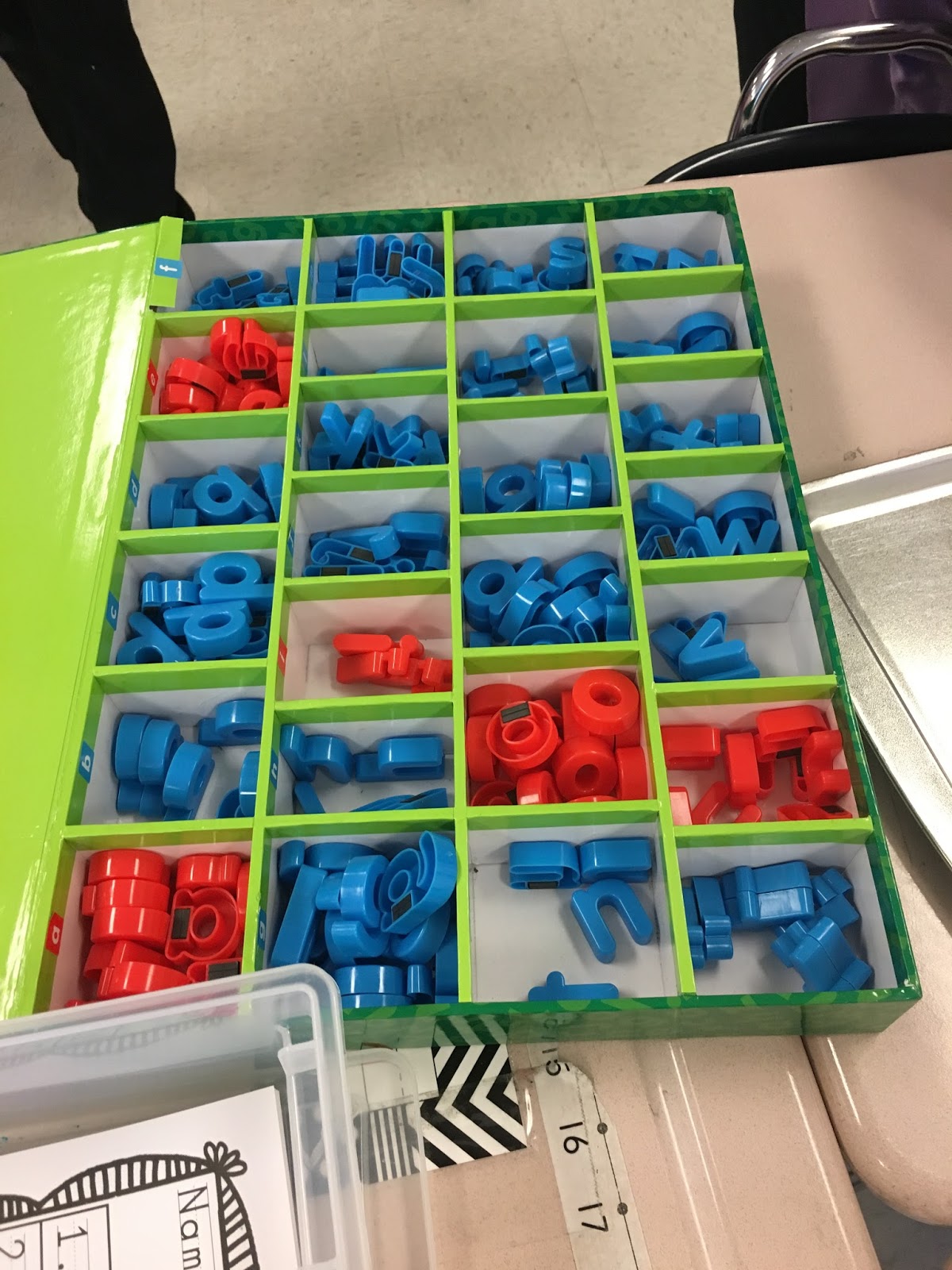
4.  Magnetic Letters and/or Letter Tiles-My beginning readers use magnetic letters or letter tiles several times a week for making words activities.  I love the set of magnetic letters shown below because they made the vowels red and the consonants blue.  Grab the magnetic letters HERE.  A great investment for your classroom.   I have had the letter tiles for 13 years but I found some similar ones HERE.  Another alternative would be Scrabble letters.


5.  PD Books-Always good to know your stuff, right?!  Below are my two favorites for Guided Reading.  I referenced these in my last post, as well.  Click each cover to check it out!

This book was my GO TO when I first began teaching 13 years ago.  I still have it!  I see they have just come out with a second edition, and it's on my wish list!


And just recently, Jan Richardson has come out with a new one!  Lots of reading for me this summer!


6.  Book Buddy Bags-I LOVE these!  I order them from Creative Teaching Press every year.  I only use them with my beginning readers {levels AA-E}.  I typically work on 2-3 books per week with those little ones, because they need exposure to MANY books on their level and need that extra practice. After we've read the book in class, it goes in their baggie.  Their requirement for the night is to read the newest book we've read along with 2 old ones.  They choose which old ones to read.  I let about 8 books build up in the bag before collecting them and we begin adding more as we read them.  This helps them gain confidence as readers by becoming fluent with their books.  The kids and parents both love this system.  And as far as kids "losing books," it rarely happens.  Grab a set HERE.  


7.  Post-It-Notes-I use these a lot for background building at the start of lessons.  When we're getting ready to look at a new book, I'll ask the kids a question and they will write a {usually} one-word response on the post it with a picture.  For example, I might have a new book ready that's all about the zoo.  I'll ask the kids to write/draw an animal that lives in the zoo.  Or, if our book is about helping at home, I'll ask them to write a little something about how they help.  It's a quick way to collect our thoughts and build some background.  These are also great for quick checks/exit slips at the end of our group time.  I also use THESE exit slips as well.


8.  Portable Light/Light Switch-This is hanging behind my Guided Reading table.  I turn it on when we have groups.  The kids who are not meeting with me know that unless it's an absolute emergency, they can not interrupt.  It's a great visual reminder.  Many times, kids will come up to the table and I'll point or they will see the light and remember they need to problem solve on their own and walk away. Grab one HERE.  


9.  Mini Dry Erase Boards/Erasers/Markers-Just like the magnetic letters/word tiles, we use these dry erase boards often in groups.  I purchased the mini ones a few years ago and love them.  I used to have the large ones, but they were too bulky for 6 year old hands!!  I also love the mini-erasers that I have.  Just right!  Get some HERE.   *Mine are not the reversable, magnetic ones, but I am thinking about getting a set just for guided reading time {maybe a set of 4 or 6}.


10. Highlighters-These are great for use with worksheets or Reading A to Z books, where kids can mark in them.  We use highlighters to search for word chunks that we know.  Having those chunks "pop out" helps kids with their decoding.  *If you only have actual books for Guided Reading, highlight tape is an alternative to highlighters, however, it's very expensive, but it can be re-used over and over.  Get highlight tape HERE.


There you have it!  My top 10 favorites!  What supplies are a "must" for you during Guided Reading time?

xo
Megan

*This post contains several affiliate links.  If you choose to purchase any item shown in this post, I receive a small compensation for it.

Wednesday, May 3, 2017

Guided Reading FAQ


1.  How many groups do you meet with a day?
This varies from year to year.  This year, I met with two or three.  One group was met with in the morning while the other students were at centers and the other group was met with after lunch while the other students were doing self selected reading.  *The second group was always a higher group, so I only met with them for 15 minutes to give them some self-selected reading time.  I didn't meet with the second/third groups every day; rather 2-3 times a week.  This allowed them to have some self-selected reading time.

2.  Is your classroom library leveled?
No.  My first few years of teaching it was and I hated it!  I realized that kids were being "forced" to read books on their level rather than books they were interested in.  This made me sad.  It made me realize that I was not helping my students build a love for reading by letting them read/look at ANY books.  I switched to grouping my library by theme about 3 years into my practice and 10 years later it's still going strong.  My kids love to read!


3.  How do you assess during guided reading time?
I of course use a running record quarterly.  In addition, I use leveled checklists during groups.  I take anecdotal notes on each child.  I also have their quarterly and weekly sight word assessments.


4.  How much time do you have for guided reading?
About 30 minutes in the morning and 15-20 after lunch.

5.  How do you organize your guided reading materials?
I keep my guided reading materials organized in bins by skills.  I actually keep ALL of my Phonics and Math materials organized this way.  It allows me to grab a bin, pull and activity, and go.  I have done this for most of my teaching career and I love it!  People always comment on how easy it is to find things in my room.


That's it for my "Everything Guided Reading" post!  Please comment with questions below.  You can always email me at meganwheeler44@yahoo.com if you have specific questions!  I'm linking two of my favorite Guided Reading PD books in case you want to snag one or two to read this summer!


xo
Megan

Sunday, April 30, 2017

Guided Reading in 1st Grade

Hello, friends!  I'll be doing a series of several posts this week all about Guided Reading!  Today's post is all about how Guided Reading works in my first grade classroom!  I hope you find this post helpful.


Let's start with how I have always done Guided Reading:  Every child is assessed at the start of the year with a running record.  I use Fountas/Pinnell's assessment kit for this. Once my kids are assessed, I group them accordingly.  Ideally, it would be great to have a separate group for each "level" of kids, but that's not reality.  This can be really difficult at the start of the year, when you have 8 different groups of levels.  I group my kids who are close in level together.  For example, I might put my level B kids with my level C kids.  With the really early levels {AA-F}, I try not to group more than 2 consecutive levels together.  Doing so holds some kids back and pushes others to frustration.  With the higher levels {G-K}, it's easier to group 3 consecutive levels together because the kids are more independent at those levels and it's much easier to differentiate within the group.  

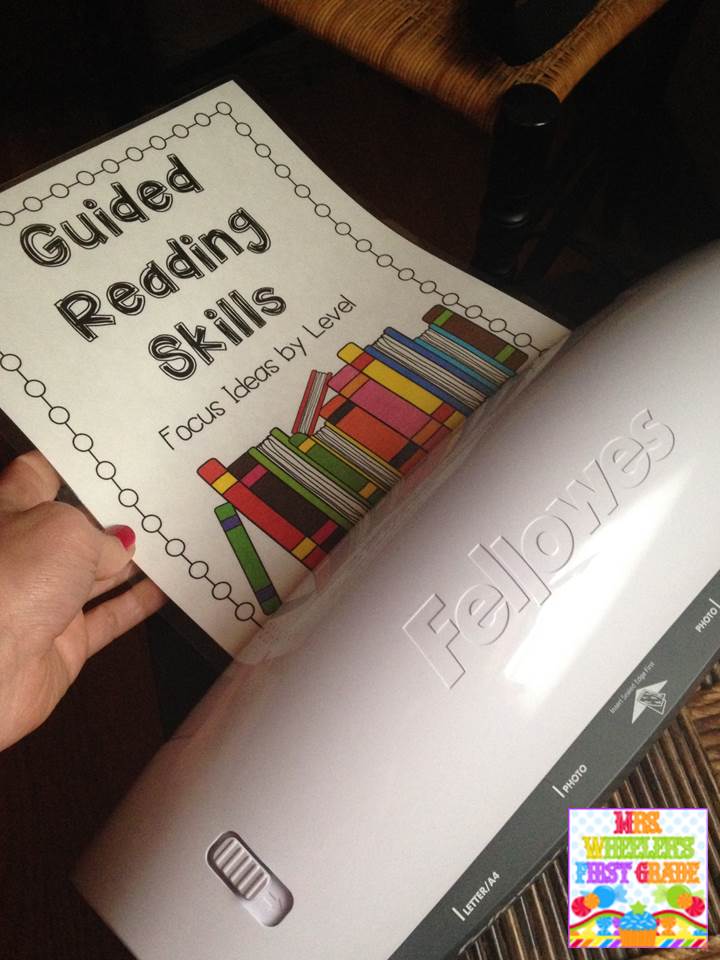
Once all groups have been established, I plan out my instruction each week.  Except for the month of may when I am exhausted and flying by the seat of my pants...it takes everything I have physically and mentally to even get to school.   I pull books from our building's book room.  We are fortunate to have this available to us! Our Title I teacher set it up many years ago.  It houses sets of leveled texts from levels AA-Z!  Most of the book sets in our room are Rigby, Fountas and Pinnell, or Reading A to Z.  I use my "Guided Reading Skills" booklet that I prepared a few years ago to plan out the skill work the kids in each group will be doing.  This is especially helpful and important because it ensures those kids are getting skill work appropriate for their specific levels.  The plans obviously look completely different for each group, however, each group has the following:  a sight word component, a Phonics/word work component, a reading component, comprehension component, and a writing component.  Below I will give an outline of each.


Sight Word Component
Every group works on sight words every day.  This looks different from group to group; my level E group might be working on the Fry's First Grade last 25 words while the I group might be working on the Fry's Second Grade first 25 words.  The level I group might be working on the Fry's Second Grade third 25 words.  The activities also vary from group to group.  All levels begin with a quick flash card warm up, where I go around the table and have them each read a word on the flash cards. My lower level groups usually play a quick sight word game 1-2 times a week.  This could be slate races, spin and cover, Go Fish, etc...The higher groups usually just practice reading and spelling their words.  Click HERE to see all sight word resources.


Those students who come in with limited sight word knowledge, or who are not learning their words as quickly as they need to be get given a Sight Word Intervention envelope.  I have sight word note cards with phrases on the back/flash cards printed ahead of time and keep them from year to year until they get torn up.  To use this, I simply asses them on their Fry's First 100 words.  I take the first five that they miss and place them into an envelope along with a note explaining they need to practice at home.  Once they can read the words to me 3 times quickly {three separate days}, they get to "retire" that word from their take-home envelopes.  There are never more than five word cards in an envelope at a time.  Then quarterly, they are assessed again.  This has been very effective because it's easy for the parents to do at home.  The kids love getting their cards switched out!


Phonics/Word Work Component
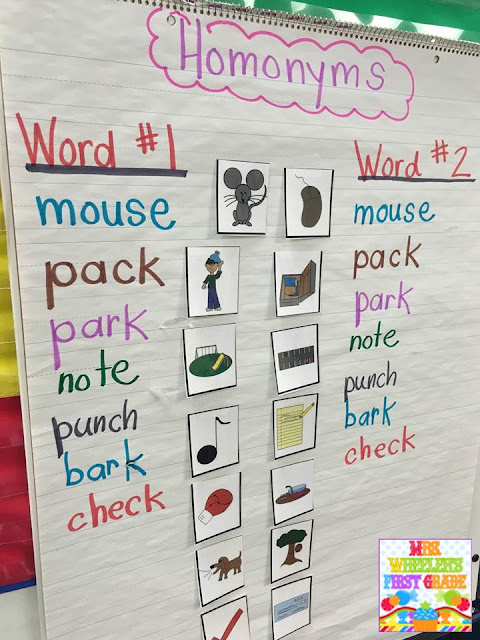
Every group works on some sort of Phonics activity every day.  As with sight words, this looks different at each level.  For example, my level B group might be working on cvc words while my level E group is working on silent e.  We do flashcards, making words, slate work, and games to practice these skills.  The higher level students work on more advanced skills such as contractions, idioms, homophones/homonyms, tricky vowel combinations, etc...


Reading Component
Every day in group, the kids independently read or partner read the book we're working on that week {we usually hit 2-3 books per week depending on level}.  I never have them round-robin or choral read read.  Instead, I stagger their starts so I can hear everyone read.  This ensures they aren't "racing" the person next to them.  Every day in my lower level groups {AA-F}, we re-read an old favorite. *After we've completed our current book, they place it in their "book buddy baggies."  These book buddy baggies go home each night.  The kids know they must read their current book and they can read any old favorites at home, too.  I send the books because most of my students do not have books at home and this is the only reading they do at night/on the weekends.  The higher levels {above H} typically read silently to themselves and ask me if they get stuck on a word.


Comprehension Component
For comprehension, I use my checklists by levels.  I focus on 1 child per day and mark how they are doing in specific areas.  I also take anecdotal notes.  I do a running record quarterly.  In addition, I have each child's sight word assessments.  Many of the books I use have coordinating quizzes with them.  These are ones that came with the book sets or have been created by teachers in my building over the years.  If there isn't a quiz, I whip one up on the computer.  I typically only quiz on one book per week.  For the books I don't quiz, I do oral comprehension questions or a graphic organizer.  I love that these are differentiated!  I can use the easier version with my lower level readers and the average version with my on level/advanced readers.


Writing Component
We do a lot of writing during Guided Reading.  Reading and writing are so interdependent!  One without the other simply cannot exist.  Practice in writing helps build a child's reading skills.  In groups, we do graphic organizers as well as written response.  I make journals for each student and we use them at least 2x a week.  I have them respond to something we've read by making a personal connection.  For example, last week in one of my groups, we read a book called "Helping Mom." The kids' writing assignment was to write about a way they help someone at home.


Be sure to tune in for tomorrow's post about Frequently Asked Questions!  *If you have a specific question and you'd like me to include it in the post tomorrow, leave it below in the comments!!

If you'd like to check out my First Grade Guided Reading BUNDLE, it's loaded with many of the activities shown in this post and is marked down!  This bundle has been a lifesaver for me and many other first grade teachers.  I HIGHLY recommend purchasing it this time of year so you have summer to print, laminate, and organize your materials.  *Kindergarten version also available in my TpT store.


xo
Megan